

Resolution-focused Family Law, tailored to you.
Helping you navigate separation and divorce so you can move forward.
Want to know your options, understand the process and take your next step with confidence?
Because starting over is hard. But knowing where to start shouldn’t be.
Brisbane’s best Family Lawyers for Mediation and Divorce
★ ★ ★ ★ ★
“I had a very positive experience with Martens Legal and very happy with the outcome result.”

FEELING OVERWHELMED, STUCK, OR UNSURE WHERE TO START?
Separation isn’t just emotional.
It’s confusing, stressful, and full of decisions that feel too big to make alone.
You might be asking:
“Where do I even begin?”
“What will this cost me... emotionally, financially, legally?”
“Can I trust a lawyer to truly have my back?”
At Martens Legal, we understand the weight of it all — and we’re here to lift some of that burden.
We turn fear into forward momentum.

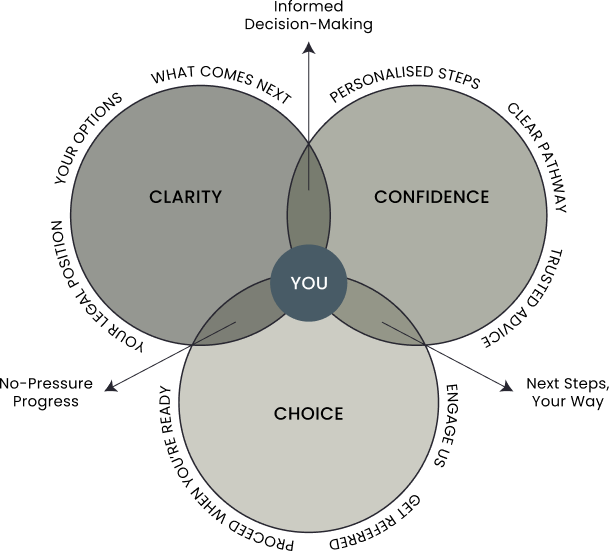
Here’s how we help you move forward with clarity and confidence:
Straight-talking guidance
No confusing jargon. Just real talk, plain English, and step-by-step legal advice so you always know where you stand.
A legal team that actually feels like a team
We treat you like a partner, not a case file. Expect empathy, clear communication, and genuine care from the first call.
Cost clarity, never bill shock
We’re upfront about legal costs, timeframes and outcomes — no hidden fees, no guesswork, just honest conversations.
Peaceful resolutions, powerful results
Whether it’s mediation or a strategic agreement, we aim for calm, constructive outcomes that protect your future — and your family’s.

The right legal path, tailored to you.
Separation isn’t one-size-fits-all. That’s why we offer multiple pathways to resolution, so you can choose what works best for your family, with expert guidance at every step.
Ideal for couples who can communicate directly, this option lets you reach your own agreement, while we make sure it’s legally sound and protects your future.
When you need space, structure, or support, we’ll handle communication with your ex’s lawyer, helping you stay calm while protecting your interests.
A safe, structured setting to resolve parenting or property matters. We guide you through the process and stand by your side, every step of the way.
Need a fast, enforceable result for property matters? Arbitration offers a quicker, private alternative to court while still delivering a legally binding outcome.
Some matters can’t be resolved outside of Court. We represent you with empathy, skill, and strategy — always working toward the best outcome.
From Consent Orders to Binding Financial Agreements, we prepare, review, and finalise the legal documents that turn decisions into action.
Starting over is hard. But knowing where to start shouldn’t be.
Know your options, understand the process and take your next step with confidence with the
Separation Starter Guide.
A personalised starter pack that gives you personalised legal pathways, a breakdown of what to expect,
and clear next steps to move forward (with us or someone else we trust).

A fresh approach to Family Law.
We started Martens Legal to do law differently. After seeing too many people overwhelmed, confused, or left in the dark during one of life’s most difficult chapters, we knew there had to be a better way.
So we built a firm that puts people first — where empathy meets strategy, and where every client is heard, informed, and empowered to move forward with clarity and confidence.
Led by Principal Lawyer Tegan Martens, our team brings heart, honesty, and straight-talking legal advice to every family law matter.
No ego.
No legal jargon.
Just smart, supportive guidance tailored to your unique situation.
FREE RESOURCES TO HELP YOU MOVE FORWARD
Not ready to speak to a lawyer yet?
It’s confronting, we get it.
That’s why we’ve created free, practical guides to help you understand your options before making any big decisions. No pressure or jargon, just real advice to give you clarity and confidence no matter your next step.




Stuck. Scared. Second-
Guessing every move?
You don’t have to figure this out alone.
Our free Separation & Divorce Assessment cuts through the chaos.
No legal fluff. No confusing steps. Just clear answers, expert strategy, and a path forward —
designed by lawyers who actually get it.
Brisbane Family Law Frequently Asked Questions
-
You will find our Brisbane office located at 359 Gympie Road, Kedron.
-
Yes. We regularly assist people Australia-wide (and even internationally) thanks to the beauty of technology.
Brisbane, Sunshine Coast and Gold Coast are our core service areas however due to our office location.
We regularly use electronic communications such as email, zoom and telephone as well as face to face when necessary. We appreciate that everyone is busy, so we will always try to tailor our communications to make them the most efficient use of everyone’s time!
-
We help people every day to secure their financial future and move forward with their lives as timely and cost effectively as possible.
The majority of people we help are those who are going through a separation.
Refer to our Services page for a breakdown of our services and how we can help. -
The first step is usually an Initial Meeting with us, but not always.
The cost of your Initial Meeting (and whether you will need one) as well as the requirements and total cost of your matter will depend on the service you require as we are not ‘a one size fits all’ type of law firm.
Once you have contacted us, we will be in touch as soon as possible to explore how we can help you and to provide you with a clear plan regarding our recommended next steps as well as our costs.
We can let you know that we will not be the cheapest or the most expensive family law firm that you contact. Our focus is to be on your desired outcome and how to achieve that in the most efficient way. That means working out what you want from the outset, coming up with a clear and transparent plan around the steps and costs, and being proactive throughout.
-
We don’t offer deferred payment directly, but many of our clients use JustFund, a trusted external provider that specialises in flexible legal funding for family law matters.
If you're eligible, JustFund can cover your legal fees upfront, and you only repay once your matter is resolved (usually from your property settlement). It’s designed to ease financial pressure and help you access the support you need, when you need it.
Learn more or apply directly at justfund.com.au